Behind the Build: Instrumenting Cost-Per-Task for a Multi-Agent Pipeline
How we added per-task cost attribution to a multi-agent pipeline that was reporting total spend but couldn't say which task type was driving it.
How we added per-task cost attribution to a multi-agent pipeline that was reporting total spend but couldn't say which task type was driving it.
An honest account of the failures in the first week of a production agent rollout — none of them were the failure mode we'd prepared for.
A quick-reference comparison of the three agent reasoning patterns that show up in nearly every framework, with the tradeoffs that actually decide which one fits a given task.
A reader asked why an agent should call a calculator tool instead of just computing the answer in text. The honest answer is about determinism and auditability, not model capability.
A practical guide to reading a LangSmith trace tree for a multi-agent run — which nodes to check first, what latency waterfalls actually tell you, and how to tag runs so debugging doesn't mean scrolling through hundreds of spans.
A concrete walkthrough of an agent stuck re-delegating the same subtask forever, why max_iter alone didn't fix it, and the three checks that actually catch this class of bug.
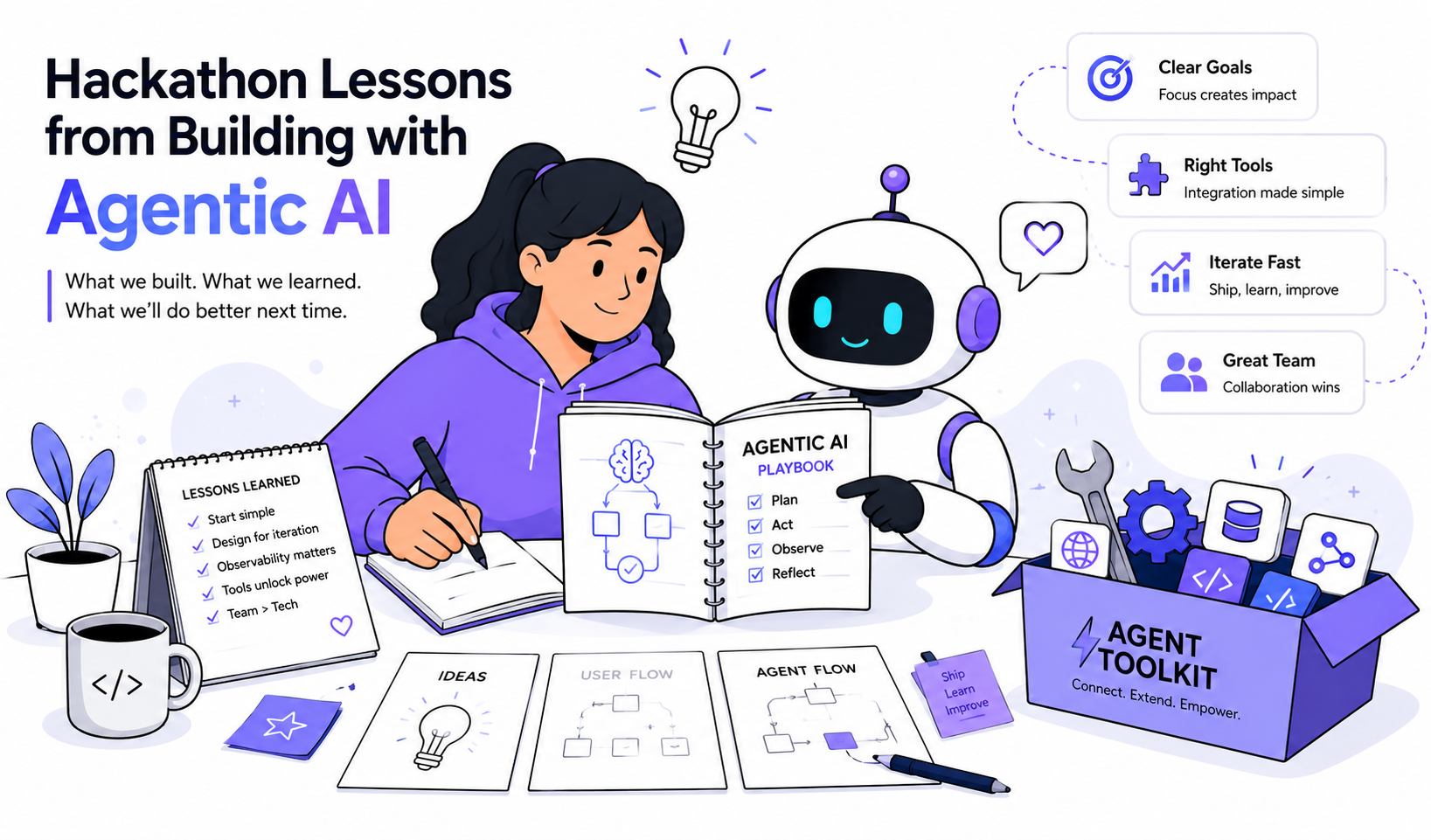
Lessons from building Agentic AI in hackathons - how the right tools, rapid iteration, and human-AI collaboration turn ideas into working systems.
Shipping an agent without evaluation is like deploying code without tests — it works until it doesn’t, and you won’t know why it stopped working. Agent evaluation is harder than LLM evaluation. A ...
Enterprise content at scale has a metadata problem. Thousands of articles, documents, and product pages with incomplete or inconsistent tags make AI initiatives — semantic search, recommendation sy...
Google’s Agent Development Kit (ADK) is a framework for building multi-agent systems powered by Gemini models. Unlike LangChain or CrewAI — which are model-agnostic — ADK is designed specifically f...